
A children’s gift under $15 can provide a full activity on its own. A board book gives a toddler a story to revisit, a small LEGO set gives a builder multiple models to make with the same pieces, and a board game can be something to open and play with a sibling. Start with the child’s age and a specific interest you have seen.
We checked these editions and configurations against U.S. manufacturer or retailer reference prices under $15 before tax and shipping. Compare the exact edition, model number, and current Amazon order total. For birthdays with a strict spending limit, account for supplies a child will need before they can use the gift.
Each recommendation says who can use it and what needs to be available at home. Ask the caregiver if you are unsure about age, duplicate books, or whether younger siblings share the same play area. Our guide to choosing gifts people appreciate can help you use an interest or a favorite routine to narrow the list.
Quick Answer
- Brown Bear, Brown Bear, What Do You See? — Best for Ages Two to Five and an Everyday Read-Aloud: If the gift is for a child you often see on family calls, choose one animal to find together during the next call.
- Melissa & Doug Water WOW! Dinosaurs — Best for Reusable Dinosaur Art at Ages Three and Up: Give it to a dinosaur fan who spends part of the week waiting for a sibling’s activities to finish.
- Crayola Super Tips Washable Markers — Best for Drawing Cards and Pictures: When the child likes making drawings to give away, set the first project around one person they have been thinking about.
Comparison Table
| Product | Best For | Age and Format | Setup or Supervision |
|---|---|---|---|
| Brown Bear, Brown Bear, What Do You See? | Ages Two to Five and an Everyday Read-Aloud | Board book; publisher ages 2–5 | May duplicate a popular title |
| Melissa & Doug Water WOW! Dinosaurs | Reusable Dinosaur Art at Ages Three and Up | Ages 3+; four reusable boards and water pen | Requires water and drying time |
| Crayola Super Tips Washable Markers | Drawing Cards and Pictures | 50 assorted markers; Amazon listing ages 3+ | Paper is separate |
| The Day the Crayons Quit | a Funny Read-Aloud About Making Art | Drew Daywalt and Oliver Jeffers; hardcover picture book | May be a repeat gift for avid readers |
| Room on the Broom | a Rhyming Story Shared with Several Kids | Illustrated paperback; publisher ages 3–7 | Some children may dislike the dragon scene |
| Connect 4 Classic Grid | Two Children Who Like Quick Rematches | Two players; age 6+ | Only two people play at once |
| Hasbro Trouble | a Small Family Game Table | Ages 5+; 2–4 players; Pop-O-Matic die roller | Random rolls strongly affect outcomes |
| Creativity for Kids Paper Airplane Squadron | a Child Who Likes Folding and Testing | Mini kit 1994000; ages 6+; patterned sheets for 20 planes | Requires clear space for flying |
| Educational Insights Original Kanoodle | a Child Who Wants a Solo Puzzle | Ages 7+; 12 pieces and 200 2D and 3D puzzles | Small pieces can go missing |
| LEGO Creator 3-in-1 Space Shuttle 31134 | a Small Space Build | Ages 6+; 144 pieces; shuttle, astronaut or spaceship | Builds share pieces and are made one at a time |
1. Brown Bear, Brown Bear, What Do You See? — Best for Ages Two to Five and an Everyday Read-Aloud

The board edition of Brown Bear, Brown Bear, What Do You See? pairs repeated questions with animals in strong colors. It gives children who enjoy hearing the same book again a pattern they can join at their own pace. They can answer before the next page, point to a color, or supply a familiar animal sound. The publisher lists this edition for ages two to five.
Look for the matching board-book ISBN when you compare listings. Other formats have different dimensions and prices, and some households may already own a copy. The short, predictable rhythm is the main reason to choose this book. A child who sits for a longer plot may enjoy Room on the Broom more.
Pros
- Repeating question gives the story a rhythm
- Illustrated animals invite pointing
- Board pages suit repeated shared reading
- Short sequence fits an ordinary bedtime slot
- Book works without extra supplies
Cons
- May duplicate a popular title
- Recurrence is less suited to a reader wanting a complex plot
If the gift is for a child you often see on family calls, choose one animal to find together during the next call. They can pick the page, and a local adult can turn the book toward the camera so everyone has a way to read along.
To buy this product, click here.
2. Melissa & Doug Water WOW! Dinosaurs — Best for Reusable Dinosaur Art at Ages Three and Up

The Melissa & Doug dinosaur Water WOW! kit has a refillable pen and four reusable picture boards. Water reveals the designs. The color fades as the paper dries so a child can try a different area on the next pass. The amount of setup is modest for a visit or waiting period where a conventional pile of markers would be awkward.
Follow the ages-three-and-up label and check with the caregiver about filling the pen and leaving the pages open to dry. A child who expects to keep the design as finished artwork will get a more suitable gift from paper and markers. Make sure the thinner board set is the exact dinosaur version.
Pros
- Water reveals pictures without conventional paint
- Four boards give a defined set of scenes
- Refillable pen supports reuse
- Compact pad works for travel
- Dry pages reset the activity
Cons
- Requires water and drying time
- Illustrations are fixed rather than blank drawing pages
Give it to a dinosaur fan who spends part of the week waiting for a sibling’s activities to finish. A grown-up can prepare the single pen before they leave home and save the next blank-looking page for the return trip.
To buy this product, click here.
3. Crayola Super Tips Washable Markers — Best for Drawing Cards and Pictures
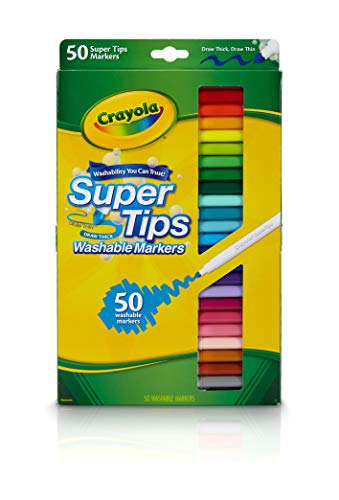
The 50-count Crayola Super Tips set offers different colors and a tip shape that supports both narrower and broader lines. It works for a child who already has a sketchpad, a place to draw, and a habit of looking for a particular color. For a compact exchange, the set can serve as a single gift when paper is already available.
Check the exact package and caregiver’s guidance for the ages-three-and-up set. Small caps need to stay out of reach of younger siblings. The washable designation has its own material and cleaning directions. Let the family decide on a table covering or work surface, and avoid assuming any stain can be removed.
Pros
- Fifty colors give varied options
- Tip can make broad and narrow marks
- Washable line suits ordinary drawing setup
- Small pack is easy to wrap
- Works with paper the household owns
Cons
- Paper is separate
- Caps need replacing after use
When the child likes making drawings to give away, set the first project around one person they have been thinking about. A spare envelope from home gives them a way to finish the project with the shades and message they choose.
To buy this product, click here.
4. The Day the Crayons Quit — Best for a Funny Read-Aloud About Making Art

The Day the Crayons Quit uses letters from crayons to turn a familiar box of art supplies into a cast of characters. The picture book gives a reader chances to change their voice as each letter comes up. It suits a child who laughs at giving objects their own opinions or wants to explain what their favorite color should draw next.
The hardcover is the edition compared in this guide. The stories within the book work best where the child can see the pictures and read or listen to the letters with an adult. A very young child who is still practicing turning pages may get more repeated use from a board book.
Pros
- Letters provide distinct character voices
- Illustrations support shared reading
- Story pairs naturally with drawing
- Physical book needs no batteries
- Format works with an adult reader
Cons
- May be a repeat gift for avid readers
- Early readers can need help with the letter text
If the child already has a well-used crayon box, ask them which of their crayons would send a letter first after you finish reading. They can dictate a line or sketch their answer later, using the supplies they already have.
To buy this product, click here.
5. Room on the Broom — Best for a Rhyming Story Shared with Several Kids

Room on the Broom follows a witch making room for more passengers as her broom ride continues. Julia Donaldson’s rhymes give children a way to hear the pattern return. The paperback is a good format for a caregiver or older sibling to read to a small group. The publisher’s suggested age range is three to seven.
The story includes a dragon and a tense stretch, so preview it for a child who is sensitive to spooky scenes. A paperback requires gentler handling than a board book. Look for the original illustrated story if a retailer offers activity books or editions featuring the same characters.
Pros
- Rhyming text works aloud
- Witch and animal passengers fit Halloween
- Story can be shared with siblings
- Paperback stores flat
- Themes carry beyond October
Cons
- Some children may dislike the dragon scene
- Paperback corners and cover need care
Choose this when two children usually want the same grown-up to read to them. Let one listen for each returning phrase, and give the other time to find the newest rider. Both can participate before either feels ready to read a whole page aloud.
To buy this product, click here.
6. Connect 4 Classic Grid — Best for Two Children Who Like Quick Rematches
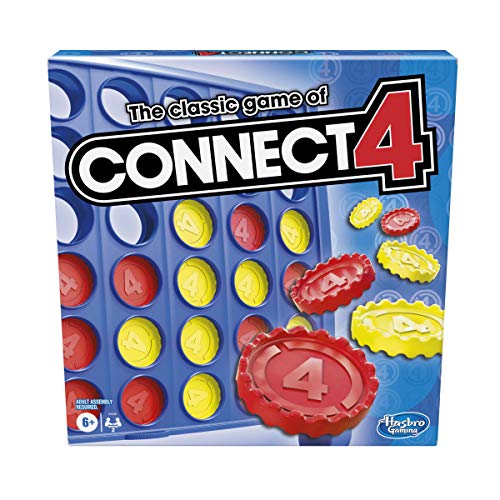
Classic Connect 4 gives two players a standing grid and separate sets of discs. Dropping a disc is a straightforward action to demonstrate. The goal also gives players room to think ahead as they become more familiar with the game. It fits a child aged six or older who regularly has a sibling, friend, or grown-up ready to play.
Check the edition and keep loose pieces away from children below the package age and choking-hazard guidance. It requires a level surface and two players for a match. A larger group will need to take turns. Choose a solo puzzle if the child usually wants a short activity on their own.
Pros
- Four-in-a-row goal is concrete
- Visible grid supports following the position
- Two-player format suits one adult and one child
- Short individual contests suit a rotating family tournament
- No reading-heavy question deck is required
Cons
- Only two people play at once
- Competitive head-to-head format is not cooperative
For cousins who see one another for a short visit, leave the grid assembled within reach when both arrive. They can finish a round before the meal or start a rematch later without needing to persuade the whole room to join.
To buy this product, click here.
7. Hasbro Trouble — Best for a Small Family Game Table
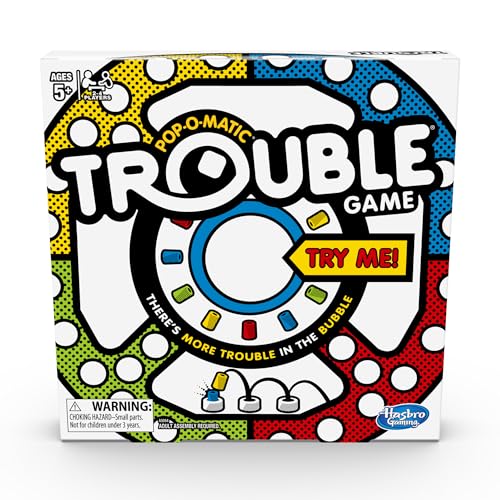
Hasbro’s classic Trouble is for two to four players ages five and up. The enclosed die pops in the center of the board and determines movement. This is a better fit than a two-player grid when more children expect a seat and can handle waiting for a turn. One adult can demonstrate the first circuit.
Playing pieces are small, and the popping action is audible. Ask about both when the gift will be shared in a house with toddlers or a person who avoids repetitive noise. Moves depend significantly on the die, which is part of the game’s appeal to some families and a limitation for children focused on strategy.
Pros
- Enclosed die stays with the board
- Simple race objective is easy to explain
- Four can play
- No batteries needed
- Competitive play differs from cooperative games
Cons
- Random rolls strongly affect outcomes
- Popper noise can be distracting
Bring Trouble when you know a grandparent or older child will sit down and help younger players get through the first few turns. Its familiar turn order gives everyone a role while there is still time for a round at the end of the visit.
To buy this product, click here.
8. Creativity for Kids Paper Airplane Squadron — Best for a Child Who Likes Folding and Testing
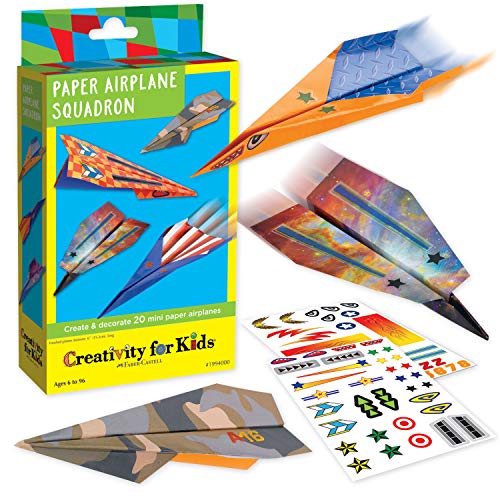
The Creativity for Kids Paper Airplane Squadron mini kit includes patterned sheets for making 20 paper airplanes. The printed designs and included folding instructions give children ages six and up a defined starting point. The sheets are separate, which makes it possible to fold a few with a friend and put the remainder away for a later activity.
Choose a clear flight area away from people and fragile objects. A younger beginner may need help lining up folds, and each patterned sheet is used when making a plane. Match the 20-plane mini kit to the price and instructions because there are larger kits with similar names.
Pros
- Supplies patterned paper for 20 airplanes
- Includes folding instructions
- Separate sheets let children share the activity
- Compact package to wrap or carry
- Finished planes can be tried after the folding activity
Cons
- Requires clear space for flying
- A beginner may need help lining up folds
If the recipient already makes planes from spare paper, give the kit on a day when an adult can help pick a place to fly a few. They can choose different folds, compare what they notice, and bring another pattern home for next time.
To buy this product, click here.
9. Educational Insights Original Kanoodle — Best for a Child Who Wants a Solo Puzzle
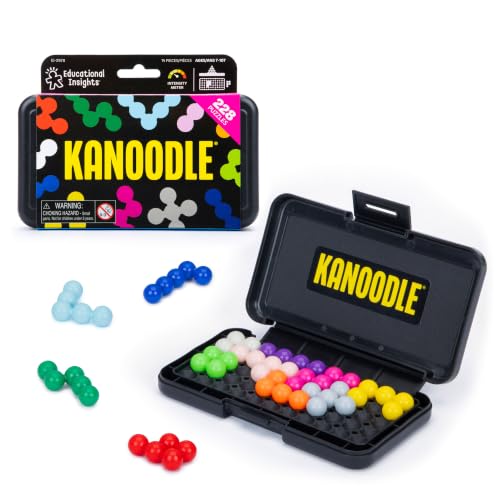
Original Kanoodle has 12 shaped pieces, a portable case, and a booklet with 200 two- and three-dimensional puzzles. It gives children aged seven and above a way to choose a challenge and work on it at their own speed. The models can be taken apart and used again as the child moves through the booklet.
Check that the listing is the original pocket game. Other products use similar names and different rules or prices. A small set of shaped pieces is easy to carry but also easy to misplace. Start on a tray or stable table, especially in a house with younger siblings.
Pros
- Designed for a single player
- Two puzzle formats
- Includes a carrying case
- Same pieces work across many challenges
- No batteries needed
Cons
- Small pieces can go missing
- Use a flat surface for setup
Choose this for a child who likes finishing one part of a challenge after everyone else leaves the table. They can set aside a specific diagram and come back without relying on a group to remember whose turn it was.
To buy this product, click here.
10. LEGO Creator 3-in-1 Space Shuttle 31134 — Best for a Small Space Build
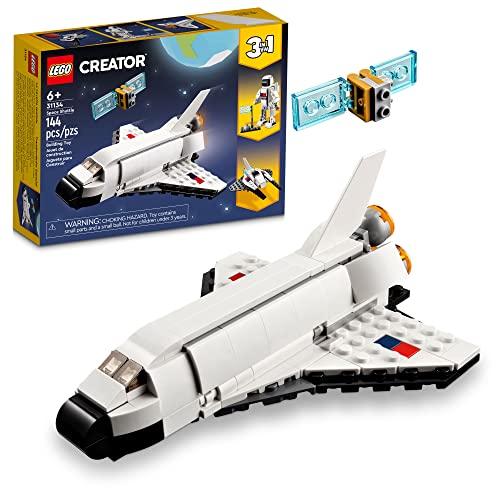
LEGO Creator set 31134 is a 144-piece space-themed kit for ages six and up. It gives a builder the parts for a shuttle, a poseable astronaut, or a spaceship. The alternate builds add a reuse option to a compact set, and the finished model is small enough to plan for a shelf or desk.
The three builds share pieces, so complete one at a time. Some pieces are small and need to stay away from younger children. Choose the matching 31134 box, particularly when the Amazon listing groups it with larger or limited availability sets. Compare the child’s experience if a first build will need adult help.
Pros
- Three possible builds
- Exact 31134 number helps distinguish the set
- Small display footprint
- Space theme for a known interest
- Pieces can be reused after taking a model apart
Cons
- Builds share pieces and are made one at a time
- Keep small parts away from younger children
Give the 31134 set to the child who keeps redesigning a favorite model after the instructions end. The build they choose first can stay on display for as long as they want, then become a different space model without buying another box.
To buy this product, click here.
Buying Guide
Check the actual edition and age label
Book age ranges come from the exact publisher edition. Toys, games, and art materials have model-specific guidance. If older and younger children use the same room, ask the caregiver where pieces and caps can be stored.
Budget for a complete activity
Estimate what the family needs to get started. A marker set uses paper the child already has. A refillable water-reveal board needs water and time to dry. Evaluate costs based on the exact package and checkout total.
Decide who will do the activity
A board book suits an adult and a child. Connect 4 needs a second player, Trouble fits a slightly larger table, and Kanoodle works for one child. Match the activity to who will be available after opening.
Use a specific interest to narrow the list
Pick a story for a child who already asks for repeating lines, or a shuttle build for someone fascinated by space. Our guide to choosing a meaningful gift covers how a familiar detail can help a modest gift fit a particular occasion.
FAQ
What is a good gift under $15 for a toddler?
The Brown Bear board-book edition suits many children ages two to five. Check the caregiver’s view and compare the exact board-book ISBN with the books the child already owns.
Which choice fits a child who likes space?
LEGO set 31134 supplies three builds that use the same parts. It is labeled for ages six and up. Check the exact box and total and keep small bricks away from younger children.
What can a child use during a waiting period?
A dinosaur Water WOW! board is a portable option for ages three and up when a caregiver can handle the pen and drying. Older children may prefer Kanoodle if a tray or table is available for the small pieces.
Can I give a group game to a seven-year-old?
Yes, if they have an available player or group. Connect 4 is for two players. Trouble is for two to four. For a child who prefers making things together, the paper airplane kit can give two children separate sheets to fold and an activity they can try side by side.
How do I keep the purchase under $15?
Compare the current checkout total for the exact age-appropriate product. Include tax, delivery, and anything the child needs to use it. Products close to the ceiling may only meet the item-price portion of the budget.
Final Verdict
Brown Bear is a strong choice for a toddler who already participates in a short story. For a child interested in art, match the dinosaur board or washable markers to where and how they draw.
Choose Connect 4 for two regular players, Kanoodle for solo puzzles, and the Creator shuttle for a builder who likes to remake a model. An available table, an interested playmate, or a place for the pieces can make more difference than the size of the box.