

Five, six and seven can look close on a birthday invitation, yet the children receiving these gifts may want quite different things. Start with what the child does for fun now. A fan of building might prefer an open box of pieces, while a child who likes stories might want a book to share with an adult.
Compare the listed minimum age with the child’s actual age and the skill the product asks for. A five-year-old can use many choices here, while Connect 4 Classic Grid starts at six according to the selected listing. Several games require another player, and some building kits or games have small pieces that caregivers must manage.
These picks cover creative play, short shared games, solo activity, and books. Use choosing gifts people appreciate to connect them to a specific interest, then check the age, pieces and setup against the child’s home before buying.
Quick Answer
- LEGO Classic Large Creative Brick Box 10698 — Best Overall for Open-Ended Brick Building: Choose the Creative Brick Box for a child who regularly returns to building and likes taking designs apart to try something new.
- MAGNA-TILES Classic 32-Piece Set — Best for Fast Tile Builds: Choose the Classic set when the child enjoys attaching and rearranging shapes without needing a detailed model plan.
- Crayola Inspiration Art Case Tie-Dye — Best for a Child Who Draws Often: Choose the Tie-Dye case when the child wants several ways to draw and likes keeping the materials together.
Comparison Table
| Product | Best For | Documented Age and Format | Play Consideration |
|---|---|---|---|
| LEGO Classic Large Creative Brick Box 10698 | Best Overall for Open-Ended Brick Building | Ages 4+; 790 pieces with storage bin | Small pieces require careful cleanup |
| MAGNA-TILES Classic 32-Piece Set | Fast Tile Builds | Ages 3+; translucent squares and triangles | Thirty-two tiles limit larger builds |
| Crayola Inspiration Art Case Tie-Dye | a Child Who Draws Often | Ages 5+; 140 pieces including paper and case | Headline count includes paper |
| Melissa & Doug Water WOW! Take-Along Drawing Set | a Travel Drawing Activity | Ages 3+; refillable water pen and activity case | Pages need drying between sessions |
| Gamewright Outfoxed! | Cooperative Family Play | Ages 5+; 2–4 players; cooperative mystery | First session may need adult guidance |
| Hasbro Trouble | an Ages-Five-and-Up Race Game | Ages 5+; 2–4 players; Pop-O-Matic die roller | Random rolls strongly affect outcomes |
| Connect 4 Classic Grid | Two Players Ages Six and Up | Two players; age 6+ | Only two people play at once |
| Melissa & Doug Wooden Building Blocks | Balancing and Stacking | 100 blocks in four colors and nine shapes; ages 2+ listing | Needs a level building area |
| The Day the Crayons Quit | an Illustrated Read-Aloud | Drew Daywalt and Oliver Jeffers; hardcover picture book | May be a repeat gift for avid readers |
| Pressman Let’s Go Fishin’ | a Moving Target Game | Rotating pond game; 1–4 players; age 4+ | Requires batteries |
1. LEGO Classic Large Creative Brick Box 10698 — Best Overall for Open-Ended Brick Building

The LEGO Classic Large Creative Brick Box 10698 lists ages four and up and includes 790 pieces. Its appeal at five to seven is the freedom to carry an idea from one build to the next, using pieces that can make vehicles and other shapes. The storage bin is part of the format.
The small pieces require a sensible play and cleanup arrangement, particularly in a home with younger siblings. A young builder may prefer seeing the pieces sorted into small groups before exploring the whole box. Check whether the child enjoys making their own designs or wants a kit with one clear model.
Pros
- Open-ended bricks support many designs
- Wheels and other elements vary builds
- Box provides storage
- No batteries needed
- Parts can serve repeated projects
Cons
- Small pieces require careful cleanup
- Large piece count can overwhelm a beginner
Choose the Creative Brick Box for a child who regularly returns to building and likes taking designs apart to try something new. Offer a first project at a clear table where a caregiver can help keep small pieces together.
To buy this product, click here.
2. MAGNA-TILES Classic 32-Piece Set — Best for Fast Tile Builds
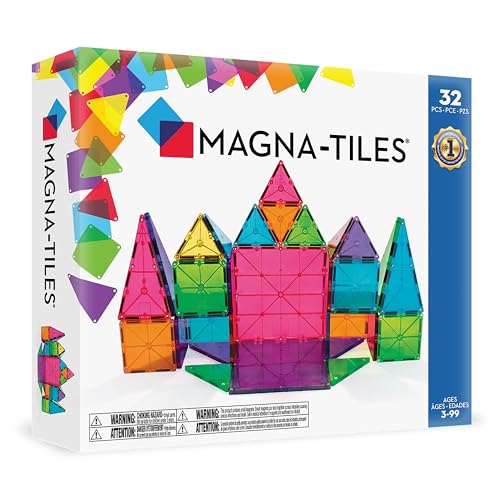
The MAGNA-TILES Classic set has thirty-two translucent squares and triangles and is listed for ages three and up. Connecting at the edges makes it easy to change a build while it is taking shape. A child can use the squares and triangles to make flat patterns or stand up small structures.
Check which pieces a child already owns and how much room they have to play. This set supports smaller structures. Caregivers should follow the enclosed advice for inspecting the tiles and remove damaged pieces from use. The magnets must stay enclosed within intact tiles.
Pros
- Tile edges connect for quick changes
- Squares and triangles support different structures
- Translucent tiles provide a color-play option
- Flat pieces stack down for storage
- Works for solo or shared builds
Cons
- Thirty-two tiles limit larger builds
- Damaged tiles need to be removed promptly
Choose the Classic set when the child enjoys attaching and rearranging shapes without needing a detailed model plan. A clear floor or low table gives them room to use the thirty-two tiles, with an adult checking that they remain intact.
To buy this product, click here.
3. Crayola Inspiration Art Case Tie-Dye — Best for a Child Who Draws Often

Crayola’s Tie-Dye Inspiration Art Case is labeled ages five and up. The 140-piece package includes different drawing media and paper, along with the case. This is a useful choice for a child who already likes picking colors and working with more than one kind of mark.
The count includes supplies other than drawing tools, so compare the variety rather than expecting 140 markers. Plan a surface where the child can work and check which markers and other pieces need cleanup. A case makes it easier to return items to one place afterward.
Pros
- Includes several drawing media
- Paper enables a first drawing
- Case keeps colors together
- Portable format moves between tables
- Open-ended art supports self-directed use
Cons
- Headline count includes paper
- Requires a suitable drawing surface and marker cleanup
Choose the Tie-Dye case when the child wants several ways to draw and likes keeping the materials together. Set out a clear surface and a few sheets of paper, leaving the child to decide what they want to make.
To buy this product, click here.
4. Melissa & Doug Water WOW! Take-Along Drawing Set — Best for a Travel Drawing Activity
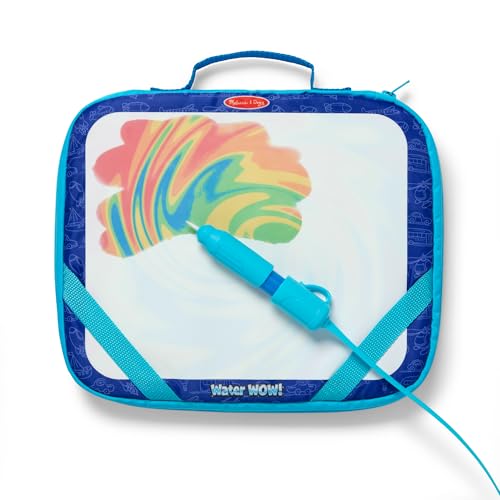
The Melissa & Doug Water WOW! Take-Along Drawing Set lists ages three and up. The selected case has a reusable drawing board, water pen and activity accessories. A child in this range can choose free drawing or follow a supplied prompt, making it useful when a full marker and paper setup is hard to carry.
The pen still needs water and the pages need time to dry. Have a caregiver fill it and store it with attention to drips. For a child who wants to keep photographs or drawings from a trip, consider that the water marks are designed to fade as they dry.
Pros
- Water pen can be refilled
- Drawing board offers free drawing
- Activity cards give prompts
- Case keeps accessories together
- Drying allows repeat use
Cons
- Pages need drying between sessions
- Requires a little water and checking for drips
Give the Take-Along set when the family wants a manageable activity for travel or waiting. Its best use is repeat drawing in a contained case, with an adult handling the water and making time for the surfaces to dry.
To buy this product, click here.
5. Gamewright Outfoxed! — Best for Cooperative Family Play
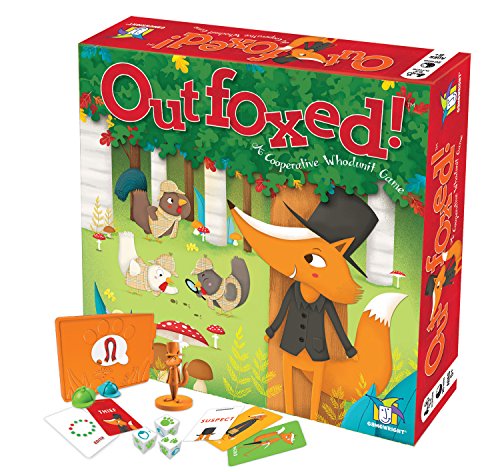
Gamewright’s Outfoxed! is a cooperative mystery for two to four players ages five and up. The evidence decoder gives children a concrete action as the group narrows down suspects. The short format is appropriate for families who want to work together toward one outcome.
An adult may need to explain the rules on the first play and help children track the evidence. Check that at least one other person will be available. The experience depends on the group discussing its choices, so it serves a different purpose from an independent puzzle.
Pros
- Players work toward one shared result
- Clue decoder gives a physical deduction step
- Dice vary the sequence of moves
- Two players can start a game
- Twenty-minute format fits a short gathering
Cons
- First session may need adult guidance
- Requires at least two participants
Choose Outfoxed! for a child who likes detective stories and wants other people to play along. Set aside time to learn the first round together, leaving room for the child to handle the decoder and suggest which evidence should guide the next decision.
To buy this product, click here.
6. Hasbro Trouble — Best for an Ages-Five-and-Up Race Game
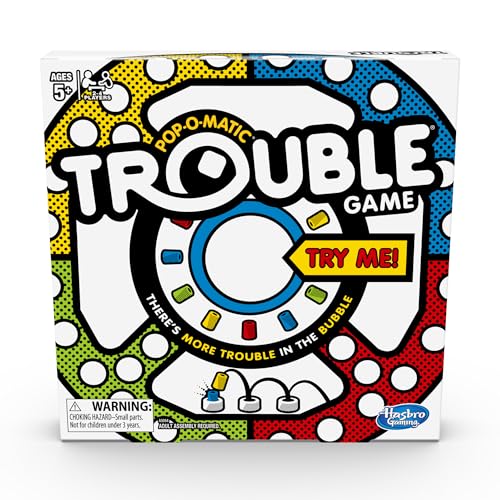
Hasbro Trouble is a two-to-four-player game for ages five and up. The Pop-O-Matic unit keeps the die inside the center mechanism and gives each turn a clear physical action. It can suit a family that wants a simple race with more than two possible players.
Luck shapes the game, and someone can fall behind or lose a position. That may suit a child who enjoys surprises and be frustrating for a child who wants outcomes to reflect a clear plan. The popper also makes a noticeable sound.
Pros
- Enclosed die stays with the board
- Simple race objective is easy to explain
- Four can play
- No batteries needed
- Competitive play differs from cooperative games
Cons
- Random rolls strongly affect outcomes
- Popper noise can be distracting
Choose Trouble when the child enjoys turn-taking, variable rolls and a competitive race. A short first game with an adult or sibling is a practical way to learn the track and decide how many players make the game fun.
To buy this product, click here.
7. Connect 4 Classic Grid — Best for Two Players Ages Six and Up
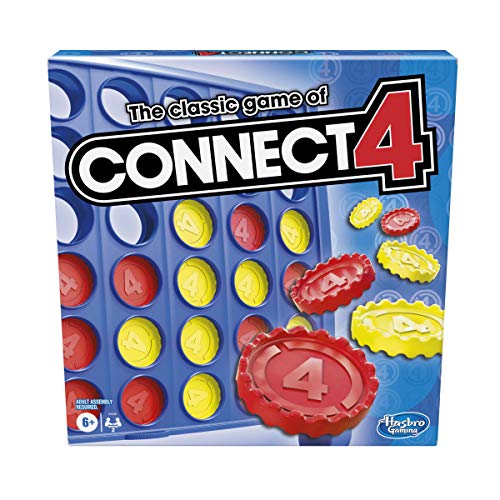
Connect 4 Classic Grid is labeled ages six and up for the selected listing. Two players drop pieces into a vertical grid and try to line up four. The goal can be demonstrated quickly, while looking ahead at where the next piece will land adds something to learn over repeated rounds.
Save this model for a six- or seven-year-old within this guide’s age range. It needs a willing second player and can become very competitive. Use a level spot and make sure the loose discs are gathered after each session.
Pros
- Four-in-a-row goal is concrete
- Visible grid supports following the position
- Two-player format suits one adult and one child
- Short individual contests suit a rotating family tournament
- No reading-heavy question deck is required
Cons
- Only two people play at once
- Competitive head-to-head format is not cooperative
Choose Connect 4 when the child is at least six and has somebody who wants a quick head-to-head game. The vertical grid makes sense for a child who likes spotting patterns and wants another try immediately after resetting the board.
To buy this product, click here.
8. Melissa & Doug Wooden Building Blocks — Best for Balancing and Stacking

Melissa & Doug’s one-hundred-piece wood block set includes four colors and nine shapes. Its listing starts at age two, and it still fits a five-to-seven-year-old who enjoys bridges, walls or building imaginary towns. Balance and placement are the activities here, with no connecting mechanism.
A level building surface is important and one hundred blocks need a cleanup plan. Check whether the child still enjoys free block play. If they prefer a detailed model or like joining parts securely, the building style of the block set will feel different.
Pros
- Shapes serve stacking and sorting
- Wood pieces offer gravity-based building
- Four colors support visual grouping
- Parts require no connectors
- Many pieces allow shared construction
Cons
- Needs a level building area
- A hundred pieces create cleanup work
Choose the wood blocks for a child who gives their own meaning to simple shapes. A clear space and a place to return all the pieces make it easier for several children to build alongside each other without a fixed set of directions.
To buy this product, click here.
9. The Day the Crayons Quit — Best for an Illustrated Read-Aloud

The Day the Crayons Quit is a hardcover picture book by Drew Daywalt with illustrations by Oliver Jeffers. The publisher’s age range includes five to seven. Each crayon writes in a different voice, which gives a reader several ways to make the text lively and gives the child something to notice in the illustrations.
A young reader may enjoy the book more with someone reading the letters aloud. If the child already owns it, choose a story that is new to the shelf. You can offer a drawing activity afterward without treating it as a reading lesson or requiring other materials.
Pros
- Letters provide distinct character voices
- Illustrations support shared reading
- Story pairs naturally with drawing
- Physical book needs no batteries
- Format works with an adult reader
Cons
- May be a repeat gift for avid readers
- Early readers can need help with the letter text
Give this book to a child who enjoys jokes, drawings, or having an adult read aloud. Read it together if invited and let the child decide whether to make a picture using some of the colors afterward.
To buy this product, click here.
10. Pressman Let’s Go Fishin’ — Best for a Moving Target Game

Pressman’s Let’s Go Fishin’ uses a rotating pond with fish and rods for one to four players, ages four and up. Players time their attempts as the mouths open, giving the child a different challenge from choosing a move in a strategy game. One person can also use the rotating pond alone.
The selected listing calls for a separate C battery. Take the time to count small pieces after use and ask a caregiver to handle the battery setup. A player who wants a very quiet tabletop activity may prefer a nonmotorized choice.
Pros
- Moving pond gives an active timing challenge
- Rods allow several players
- One player can use the game alone
- Rounds invite a quick replay
- Physical pieces give a screen-free activity
Cons
- Requires batteries
- Small fish and rods need to be gathered
Choose Let’s Go Fishin’ when the child likes a quick timing challenge and can play with the small pieces according to the instructions. Confirm the separate battery before giving it, so the caregiver can decide whether to start a round right away.
To buy this product, click here.
Buying Guide
Use the age on the exact product
Check the minimum age of the selected set, not a similar-looking edition. A product marked six and up belongs with an older child in this range. Choose around the child’s interest and experience as well, since age alone does not tell you which rules or activity they enjoy.
Check player count and adult involvement
Outfoxed! needs two to four people who want to solve clues together. Trouble supports a group race, and Connect 4 is for two. If there will rarely be another player available, choose an independent build, book, or art case and arrange help only where the child needs it.
Think about setup and cleanup
Check floor or table space, battery requirements and what happens when small pieces get mixed between rooms. A water pen requires filling and time to dry. A drawing case needs a suitable work surface. Ask the caregiver whether the required materials and space already exist.
Make a choice around current interests
A child who likes small stories with humor may want a book even when they already have several games. A young builder may want a bigger stash of parts for their own designs. Our guide to what makes a gift thoughtful can help match a particular interest to the gift without guessing from the child’s age alone.
Decide how play can continue
Look for repeat activity in a way that suits the child. Open-ended bricks can be rebuilt. A competitive game can start over quickly. Shared reading works at the family’s pace. Check for duplicates first and make any planned time together easy for caregivers to schedule.
FAQ
Which products here are for age five?
Outfoxed! and Trouble start at five, and the selected Crayola case is labeled five and up. Several open-ended choices have a lower minimum age. Save Connect 4 Classic Grid for age six and up.
What if the child does not read independently?
The picture book can be read aloud, and many builds and games can be demonstrated. A caregiver can read the directions or work through the first game together.
Which selection works for independent play?
The drawing case, water activity and open-ended construction sets allow solo play within their instructions. Let’s Go Fishin’ also supports one player. Confirm whether parts or batteries need adult handling.
What should I look for in a magnet tile set?
Check the age, contents and maker’s use directions for the precise product. Use intact pieces and keep damaged pieces out of play. Ask the caregiver whether they want magnetic building at home.
Can a child age seven still enjoy simple blocks?
Yes, if the child still likes balancing structures or making play scenes. If they like more detailed assembly, the brick box may better match that interest.
How do I choose between cooperative and competitive games?
Ask how the child likes to play. Outfoxed! gives participants one shared goal. Trouble and Connect 4 involve individual outcomes and support different group sizes.
Final Verdict
The LEGO Classic box is the strongest starting point for a child who wants open-ended building. MAGNA-TILES offers a different way of connecting shapes, and the Crayola case serves a child who picks drawing most often.
For a game, check who will join in and the age on the specific box. Choose an activity the child can begin with the people, space and supplies the household has.