Small gift details often matter more than people expect. A simple present can feel thoughtful and memorable when it includes the right finishing touches, because those details signal that you paid attention to the person, not just the item.
That is why thoughtful finishing touches that elevate any gift are worth planning before you wrap anything. A handwritten note, careful presentation, or a tiny personal reference can turn something ordinary into something that feels chosen with care. The gift does not need to be expensive to feel meaningful. It needs to feel considered.
Why finishing touches matter so much
People usually remember the feeling a gift gave them more than the exact price tag. A present that looks rushed can seem less thoughtful, even if the item itself is useful or generous. On the other hand, a modest gift with a personal message or beautiful presentation often feels more memorable because it suggests time, attention, and intention.
Finishing touches also help a gift reflect the relationship. A birthday gift for a close friend does not need the same presentation as a practical thank-you gift for a neighbor, but both benefit from details that make the gesture feel human. These touches communicate something simple and powerful: I thought about you specifically.
Start with presentation, not perfection
Presentation does not mean extravagant wrapping. It means making the gift feel cared for before it is even opened. Clean wrapping paper, a reusable bag, a ribbon, or a neat box can make a strong impression without adding much cost.
The best presentation matches the person and the occasion. A child’s gift might feel more joyful with bright paper and a playful tag, while a gift for a coworker may feel more appropriate with a clean, understated look. The goal is not to impress with effort alone. It is to make the gift feel suited to the moment.
Simple presentation choices that usually work well
- Neutral wrapping paper for most occasions, especially when you are unsure of someone’s style
- Fabric ribbon or twine for a softer, more personal look
- A sturdy gift bag when convenience matters, such as office exchanges or last-minute gifts
- Tissue paper in matching colors to make even small gifts feel more intentional
- A small tag so the gift clearly feels addressed to one person
Add a handwritten note whenever you can
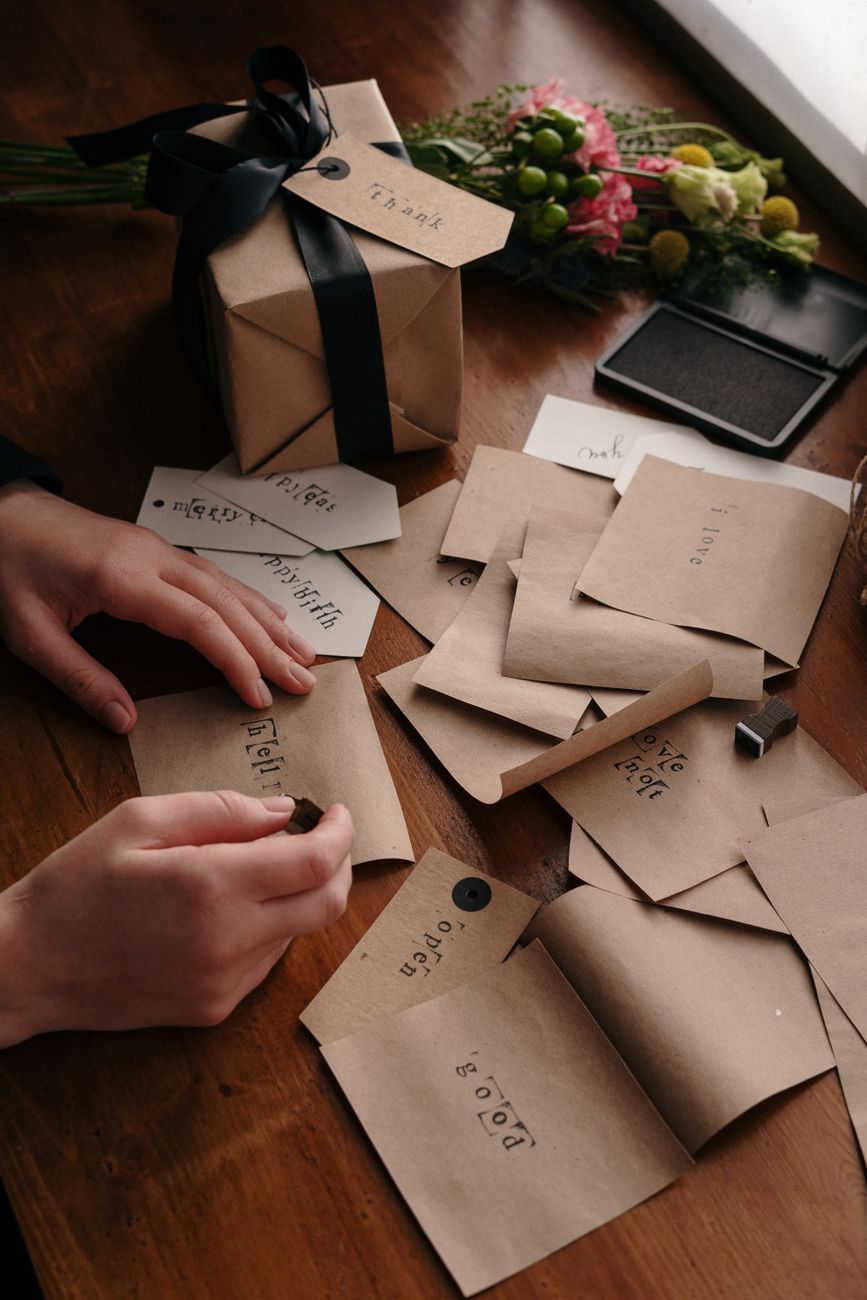
A handwritten note is one of the most reliable thoughtful finishing touches that elevate any gift because it adds context. The gift may be a candle, a book, or a pair of gloves, but the note explains why you chose it. That explanation often matters more than the object itself.
Keep the note short if that feels natural. A few honest lines are usually better than a long message that sounds forced. Mention a specific memory, a quality you admire, or a reason the gift made you think of them.
What to write in a gift note
- A specific compliment: “You always make people feel welcome, so I wanted to give you something cozy for your home.”
- A shared memory: “This reminded me of our trip last spring, and I thought you’d enjoy it.”
- A simple appreciation: “I’m grateful for your help this year, and I wanted to say thank you.”
- A light personal touch: “I remember you saying you loved this color, so I chose it for you.”
The value of a note is not in perfect wording. It is in the sense that someone took a moment to connect the gift to the relationship.
Personalize the gift without overcomplicating it
Personalization works best when it feels natural, not forced. A monogram, engraved date, custom label, or favorite flavor can make a gift feel more specific to the recipient. The key is choosing personalization that fits the person rather than adding details just because they are available.
For example, a personalized cutting board can feel thoughtful for someone who enjoys cooking, but it may not make sense for someone who rarely uses the kitchen. In that case, a custom bookplate, name tag, or favorite color wrapping might be more useful. Personalization should support the person’s identity, not just decorate the gift.
| Personalization type | Best for | Why it works |
|---|---|---|
| Monogram or name | Classic, everyday gifts | Feels personal without being overly specific |
| Engraved date | Anniversaries, milestones, retirements | Marks a moment the recipient may want to remember |
| Favorite color or pattern | Close friends, family members | Shows you notice their taste |
| Inside joke or shared reference | Very close relationships | Adds warmth and familiarity |
Choose a finishing touch that fits the relationship
Not every gift needs the same level of embellishment. Some relationships call for warmth and intimacy, while others benefit from understated polish. Thinking about the relationship helps you avoid gestures that feel too formal, too casual, or accidentally over the top.
Examples of matching the touch to the relationship
- For a parent: a note expressing gratitude often means more than elaborate wrapping
- For a friend: a playful tag or memory-based reference can make the gift feel fun and personal
- For a coworker: clean presentation and a brief message usually feel appropriate
- For a partner: a small detail tied to a shared experience can make even a simple gift feel deeply personal
- For a teacher or neighbor: neat presentation and sincere appreciation often matter most
This is where thoughtful gift giving becomes less about the object and more about social awareness. People notice when a gift feels suited to the relationship, because it shows respect as well as care.
Use sensory details to make the moment feel special
Some of the best finishing touches appeal to the senses. A soft ribbon, pleasant scent, textured paper, or even a carefully chosen color palette can make opening the gift feel more enjoyable. These details do not need to be elaborate. They just need to create a feeling of care.
For instance, a tea gift might be wrapped with natural twine and a small sprig of dried herbs. A skincare set might feel more polished in a simple box with soft tissue paper. A cozy blanket can look inviting when folded neatly with a tag and ribbon. These details help the recipient experience the gift as a moment, not just an item.
Keep practicality in mind
Thoughtful finishing touches should add meaning, not inconvenience. A beautiful wrapping job is less helpful if the recipient cannot open the gift easily or if the packaging is so excessive that it feels wasteful. In many situations, simple and tidy is better than elaborate.
Practicality matters especially for gifts that will be mailed, transported, or opened in a group setting. If the gift is for travel, choose packaging that holds up well. If it is for a child, make sure the wrapping is easy to open. If the recipient may reuse the container, even better. A thoughtful touch is often one that respects how the person will actually use the gift.
Small details that make a big difference
Many people think the finishing touch has to be visible from across the room. Often, the most meaningful details are the quieter ones. They may not be flashy, but they make the gift feel more personal and complete.
- A specific card instead of a generic “Happy Birthday” message
- A favorite snack or treat tucked in with the main gift
- Careful color matching between the paper, ribbon, and tag
- A relevant quote if the recipient enjoys reading or journaling
- A reusable container such as a box, tin, or basket
- A memory-based detail that ties the gift to a shared moment
Common mistakes to avoid
Thoughtful finishing touches can backfire when they become more about performance than care. A few common mistakes are easy to avoid once you know what to look for.
Too much decoration
Layering on too many ribbons, tags, and add-ons can make the gift feel cluttered. In many cases, one or two well-chosen details look more intentional than a crowded presentation.
Generic messages
“Enjoy your gift” is not wrong, but it does not say much. A specific sentence about why you chose the gift feels more personal and often more memorable.
Ignoring the recipient’s preferences
Some people love ornate wrapping. Others prefer clean and simple presentation. If you know the person values practicality or minimalism, match that preference instead of defaulting to something flashy.
Over-personalizing too soon
Inside jokes, very intimate references, or highly sentimental details are not always appropriate. The closer the relationship, the more personal the finishing touch can be. When in doubt, keep it warm and simple.
Matching the finishing touch to the occasion
Different occasions call for different levels of formality. A birthday gift, a retirement present, and a thank-you gift all carry different expectations. Choosing the right finishing touch helps the gift feel appropriate rather than random.
| Occasion | Good finishing touch | Why it fits |
|---|---|---|
| Birthday | Personal note, favorite color wrapping | Feels celebratory and tailored to the person |
| Wedding or anniversary | Elegant card, keepsake packaging | Supports a more meaningful milestone |
| Thank-you gift | Short handwritten message | Makes appreciation clear and sincere |
| Holiday gift | Festive but simple presentation | Feels seasonal without becoming excessive |
| Just-because gift | Unexpected note or small add-on | Creates a pleasantly personal surprise |
How to make any gift feel more thoughtful in five minutes
If you are short on time, focus on the few details that give the most return. You do not need a long checklist. A little intention can go a long way.
- Wrap or place the gift neatly.
- Add a handwritten note with one specific reason you chose it.
- Include one small detail that reflects the recipient’s taste.
- Use a clean tag or card so the gift feels finished.
- Remove anything that looks rushed, wrinkled, or accidental.
This approach works because it concentrates effort where people notice it most. The recipient may not analyze every part of the presentation, but they will usually feel the difference between something assembled quickly and something prepared with care.
Thoughtful gift details are really about attention
The best finishing touches do not try to prove how much you spent. They show that you noticed the person, remembered something about them, and made a few choices with them in mind. That is why small details often matter so much.
When you focus on thoughtful finishing touches that elevate any gift, you are not just decorating an object. You are giving the present a sense of connection. And for many people, that is what makes a gift worth keeping, remembering, and appreciating long after it is opened.