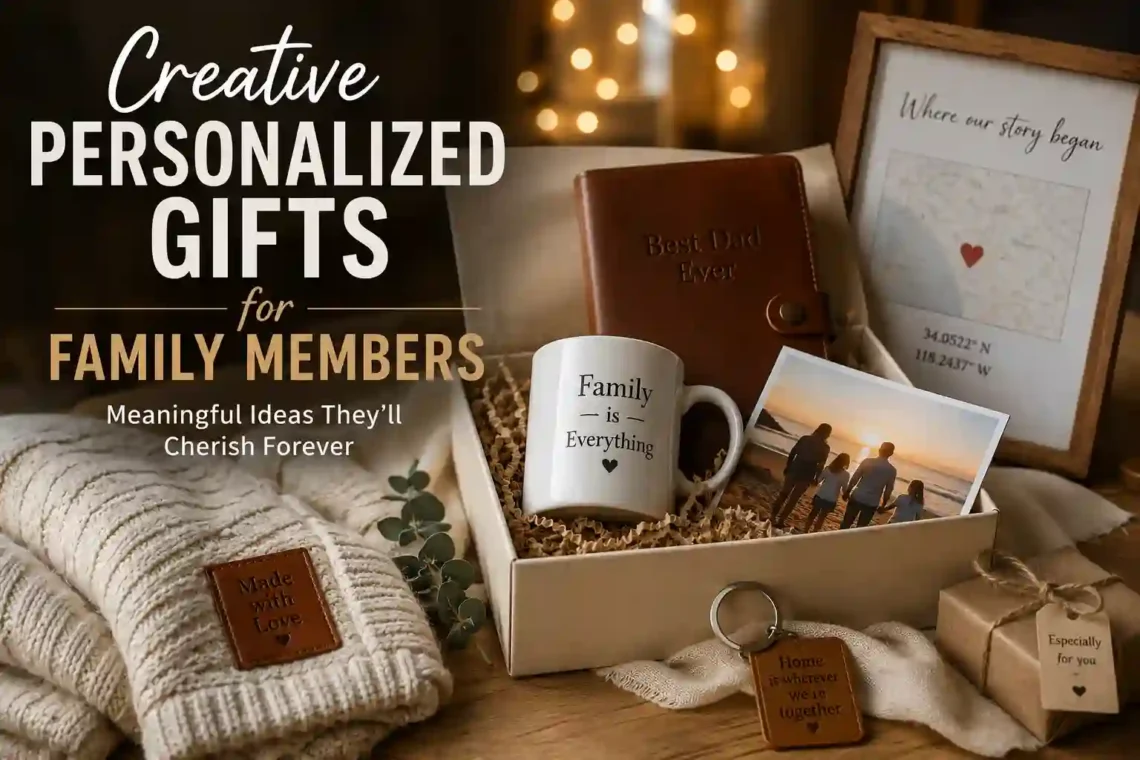
You want creative personalized gifts for family members that actually feel like them, not like something you picked up in a hurry. That search matters because a well-chosen personalized gift does more than decorate a shelf. It signals that you noticed small details, that you remember conversations, and that you value the relationship enough to invest time and meaning. Below you will find practical guidance, psychological insight, and real-world scenarios to help you design gifts that land emotionally and age well in family life.
Quick answer: How to choose the right personalized family gift
- Start with the relationship and the story. Ask what memory, identity, or future moment you want the gift to connect to.
- Pick the personalization method to match the person. Engraving and monograms suit long-term keepsakes. Stories, voice recordings, and shared experiences suit emotional connection.
- Prioritize clarity and consent. Avoid surprises that could embarrass, expose private history, or clutter someone’s space.
- Presentation matters. A short handwritten note that explains the choice often makes a simple personalized object feel profound.
Why personalization works in family gifting
Personalized gifts tap into memory and identity, which are central to family bonds. They turn an object into a story starter. They also show effort, which often matters more than monetary value when families are involved.
A psychology note, folded into a family scene: think of your aunt who keeps handwritten recipes. That recipe card is a time capsule and a social anchor. A custom recipe book that collects those cards and adds photos will create the same magnetic pull, but amplified. Or imagine your teenage cousin who hates formal jewelry but lights up when you give them a playlist of songs from family road trips, paired with a map that marks each stop. The personalization there is not about the medium, it is about the memory you tied together.
Real examples help. Once, a daughter compiled old voicemails and short video clips into a surprise montage for her father, who had been quiet about his own childhood. The gift unlocked stories at dinner that had not been shared before. In another household, a simple engraved keychain with coordinates of a childhood home prompted a nostalgic conversation that patched a small family rift. Both gifts succeeded because they targeted a story the recipient valued.
How to choose what to personalize: a practical decision tree
Pick a personalization focus first. That focus answers the implicit question the recipient will have: why this, now?
1. Memory-based personalization
This taps into a specific shared moment or era. Examples: a framed photo from a trip, a restored family recipe book, or a quilt made from a loved one’s old shirts.
Anecdote 1: A son collected his grandmother’s handwritten notes from church bulletins and made a bound book with scanned pages and annotations. At the reveal, she traced lines with her finger and laughed at little handwriting quirks he had preserved.
Anecdote 2: A couple gifted a map with pins and dates where they lived together to celebrate their parents’ fiftieth anniversary. Each pin had a tiny caption. The parents spent the evening telling stories linked to each pin, and the map became a living history piece on the wall.
2. Identity-based personalization
This highlights who the person is now, or who they want to be. Think engraved tools for a hobbyist, bespoke stationery for a writer, or a custom apron for someone who loves cooking.
Anecdote 1: A niece bought her uncle a leather journal embossed with his pen name. He had been writing privately for years, and the journal became the impetus to finally send a short story to a magazine.
Anecdote 2: For a sister becoming a new parent, friends pooled money for a necklace with the baby’s initials and a small charm representing the older sibling. It acknowledged a changing identity without making the gift about possession.
3. Future-oriented personalization
This celebrates what is coming, not what was. Examples include a “first trip” fund in a personalized box, or a custom itinerary and vouchers for a shared experience.
Anecdote 1: For a graduate, a parent created a travel kit with a custom leather passport holder engraved with an encouraging quote, plus a small map where they circled “first stops.” The student left for their gap year with the kit in their backpack.
Anecdote 2: To support an aunt’s retirement, her family gave a “week planner” filled with ideas for small adventures personalized to her mobility and interests, including tickets to a pottery class. The gift nudged her into trying new things.
Types of personalization and the emotional signals they send
Different personalization choices communicate different things. Picking the right medium is as important as the message.
Engraving and monograms: permanence and care
These feel lasting and formal. They communicate respect for the recipient’s role and can be beautiful for heirloom items. They are best for recipients who appreciate tradition, not for people who dislike overt displays.
Anecdote 1: A father received engraved cufflinks with the birthdates of his children. He wore them at a wedding and explained the dates to curious guests, which created a small moment of family storytelling.
Anecdote 2: A younger cousin received a stainless steel water bottle engraved with a subtle symbol he designed. The bottle became his daily companion because it reflected his taste without being flashy.
Custom art, photos, and books: narrative and intimacy
Creating an art piece or book collates memories into a readable or viewable format. These are ideal when the emotional content is complex or when you want to create a shared archive.
Anecdote 1: At a milestone birthday, siblings created a timeline book with photos, short notes, and receipts from the first time their parents bought a house. The parents kept reading the notes aloud and adding stories.
Anecdote 2: A cousin commissioned a local artist to paint a family home. Seeing the home rendered in a new light prompted neighbors to share their own memories at the reveal party.
Voice and video: presence and immediacy
Audio and video messages feel immediate and human. They are excellent for long-distance relationships or elderly family members who value voice over objects.
Anecdote 1: For a grandfather with limited mobility, grandchildren recorded short video messages about what they loved about him. Each clip was brief and specific. He played the playlist every evening.
Anecdote 2: A busy sibling created a 10-minute podcast episode interviewing their mother about her childhood. The mother cried, and the interview later became the backbone of a larger family oral history project.
Functional personalization: daily reminders
Functional personalization: daily reminders
Personalized items that fit into daily routines, like personalized mugs, calendars, or planners, keep the giver’s thought present without demanding display space.
Anecdote 1: A daily medication organizer labeled with gentle notes from a daughter turned a practical object into a daily hug. That small change increased adherence and reduced anxiety for the parent.
Anecdote 2: A brother designed a kitchen tea towel with a family recipe printed on it. It hangs in the kitchen, used and appreciated, a culinary artifact in active rotation.
Practical steps to plan and execute a meaningful personalized gift
Personalization is a process. Follow these steps to avoid regrets and make the gift feel intentional.
Step 1: Listen, observe, and collect clues
Spend a few days noting what the person talks about, what they keep on their phone, and what they avoid. Small details will point to a better personalization angle.
Anecdote 1: A woman noticed her mother always paused at a certain shelf of books. She later found out those were her mother’s college favorites. Collecting quotes from those books became the basis for a custom bookmark set.
Anecdote 2: After several family dinners, a son realized his father still used his childhood mug. He replaced it with a similar but subtly personalized ceramic mug that said “Still yours” on the bottom. The father smiled every morning.
Step 2: Choose the level of intimacy and publicness
Decide whether the personalization should be private, semi-private, or public. Some people love public displays; others prefer keepsakes that live in drawers.
Anecdote 1: A niece wanted to celebrate her mother’s weight-loss journey. Instead of a T-shirt with a slogan, she made a private photo book documenting the health milestones, to be shared between mother and family only.
Anecdote 2: For a family reunion, siblings created a banner with a playful inside joke. It was displayed at the party and sparked memories among relatives who then added their own stories to the conversation.
Step 3: Match medium to message and budget
Engraving and custom fabrication cost more, but sometimes a thoughtful DIY or a small artisanal purchase communicates the same message for less, especially with meaningful engraved jewelry gifts that become long-term keepsakes.
Anecdote 1: A college student made a handmade recipe box with printed recipe cards and hand-drawn dividers. It cost little but felt priceless because of the time invested.
Anecdote 2: A family pooled money for a professional portrait session as a graduation gift. The prints were given in a small frame with a simple plaque, which felt both ceremonial and intimate.
Step 4: Add context with a note or story
A short explanation of why you chose the personalization can transform the object into a meaningful story. Keep it specific.
Anecdote 1: A son included a four-sentence note with a bracelet that read, “For the nights you drove me home, and the mornings you made pancakes.” The mother kept the note taped into a drawer.
Anecdote 2: An aunt created a scavenger hunt that ended with a small tin labeled, “Stories for rainy days.” Inside were handwritten memories. The hunt turned a simple tin into an afternoon ritual.
Etiquette, privacy, and cultural sensitivity
Personalized gifts interact with identity. Handle personal details thoughtfully to avoid discomfort or harm.
Privacy and consent
A gift that reveals family secrets, health information, or sensitive dates can backfire. When in doubt, ask or choose a safer personalization route.
Anecdote 1: A nephew planned to give a DNA kit to his uncle without asking. He stopped because the uncle had not discussed family ancestry publicly. Instead, he made a photo album of known family lineage, which the uncle appreciated.
Anecdote 2: A sister considered engraving a condolence message on a keepsake for a grieving cousin. She first checked with a close family member to ensure the message would be welcomed. It was, and the keepsake became a comfort object.
Cultural and generational sensitivity
Monograms and heirlooms may signify different things across cultures and generations. Learn what rituals matter and avoid assuming one size fits all.
Anecdote 1: A family from two cultural backgrounds debated whether a framed family tree would be appropriate. They adapted the design to include symbols from both sides, which made the piece inclusive and cherished.
Anecdote 2: An elder in the family discouraged flashy digital displays. Instead, they preferred a small, tactile object like a pocket watch. The giver honored this preference, and the watch became a daily companion.
Presentation, longevity, and keeping the gift meaningful over time
Personalized gifts live in context. Think about how they will be used, stored, and remembered. Presentation is the final layer of meaning.
Packaging and the reveal
How you present a personalized gift matters. A simple box with a note often outperforms elaborate wrapping when the message is personal.
Anecdote 1: A son wrapped a photo book in plain brown paper with a sticker that read, “Open when you miss us.” The quiet wrap matched the intimacy of the gift and made the reveal more tender.
Anecdote 2: For a family holiday, a sibling hid small personalized objects around the house for a scavenger hunt. The hunt made the reveal playful and communal, and the gifts felt integrated into family life.
Durability and maintenance
Choose materials that will last if you intend the gift to be a keepsake. Provide care instructions for delicate items and consider archival options for photos and documents.
Anecdote 1: A daughter had a family quilt made from old T-shirts. She included a card explaining how to wash and store the quilt, which helped preserve it for the next generation.
Anecdote 2: A son gave his mother a framed collage of newspaper clippings. He used acid-free backing and advised on hanging locations away from sunlight. The care note made the frame feel like an heirloom.
Common mistakes and how to avoid them
Even well-intentioned personalization can miss the mark. These are frequent errors and quick fixes.
Mistake: Choosing personalization that reflects the giver more than the receiver
Fix: Center the recipient’s tastes and story. Test your idea with another family member who knows them well.
Anecdote 1: A brother, excited about a craft beer brand, gave engraved pint glasses to his teetotaler mother. He learned to ask about preferences first and later gave her a set of engraved tea mugs instead.
Anecdote 2: A cousin assumed everyone loved tech, and bought a smart photo frame that required app setup. The recipient was overwhelmed. The cousin then offered to set it up and created a printed album as a simpler option.
Mistake: Over-personalizing public items
Fix: Avoid gifts that publicly broadcast private jokes or health details. Use subtlety for public-facing items.
Anecdote 1: At a family reunion, a sibling put a joke on a banner that embarrassed a relative. The relative later asked for the banner to be removed. The sibling apologized and created a private keepsake version of the joke.
Anecdote 2: A mom received a sweatshirt with a nickname she no longer used. The giver learned to check which names loved ones currently prefer.
Mistake: Last-minute personalization errors
Fix: Allow lead time for custom items and check spellings and dates twice. If timing is tight, pivot to a meaningful promise note that explains the custom piece will arrive later.
Anecdote 1: A last-minute engraved bracelet arrived with the wrong year. The giver owned the mistake, returned the bracelet, and framed the corrected process as part of the story. The recipient appreciated the honesty.
Anecdote 2: A parent promised a custom storybook that required illustrations. The illustrator was delayed. They created a “voucher” and read a custom story aloud until the book arrived. The interim ritual became part of the gift memory.
Real-world gift ideas with guidance on when to use them
Below are concept-level ideas and when they shine. These are not product pushes. Use them as starting points.
- Family recipe book — Best for relatives who cherish meals, grandparents, or anyone with a culinary tradition. Use scanned handwriting for authenticity.
- Memory jar or “story jar” — Great for parents or siblings. Each slip contains a short scene or compliment. Ideal when you want ongoing connection over months.
- Audio legacy recording — Perfect for elderly relatives or long-distance family. Record short stories and preserve them digitally with simple labeling.
- Custom map or coordinates art — Works for nostalgia around places such as childhood home, wedding venue, or first job. Keep captions brief and specific.
- Subscription tailored to a hobby — When you want the gift to last, choose a subscription box or course that reflects a long-term interest, not a fleeting hobby.
- Shared-experience vouchers — Useful when you want the gift to create a future memory, such as a cooking class, a weekend getaway, or a museum membership.
Anecdote 1: A family gave a subscription to a gardening box to their mother, who had just moved to a smaller home. Each month, she tried a new plant, which became a conversation starter with visiting neighbors.
Anecdote 2: Siblings organized a one-day workshop for their father to learn basic woodworking. He loved using skills in small projects and later gifted several hand-turned spoons back to the family.
FAQ
How personalized should a gift be for different family members?
Match personalization to intimacy and context. For close family members like parents or siblings, deeper personalization that references intimate memories is appropriate. For in-laws or distant relatives, choose safer personalization, such as a monogram or a shared-experience voucher. If unsure, ask a trusted family member.
Is DIY always better than buying a bespoke item?
No. Time, skill level, and the recipient’s aesthetics matter more than whether you made it. A well-executed purchased piece that aligns with the person can be more meaningful than a rushed or poorly made DIY. If you do DIY, be honest about the charm it adds and explain the effort in a note.
How do I personalize gifts for older relatives who are downsizing?
Focus on non-cluttering gifts: digital recordings, framed photos in minimalist frames, experience-based gifts, or consumables. If you choose an object, make it multifunctional or easily stored. Include care instructions and a note explaining the sentimental value.
What should I avoid when personalizing gifts for sensitive occasions like grief or health challenges?
Avoid mentioning prognosis, specific dates of loss, or medical details unless the recipient has already raised those topics. Choose calming, respectful personalization, such as a memory book, a comforting quilt, or a donation in their loved one’s name if appropriate.
How do I present a personalized gift to maximize its emotional impact?
Include a short, specific note that explains the choice. Choose a quiet moment to present very intimate gifts. For public celebrations, consider a small private reveal followed by a public acknowledgment if the recipient would like that. Let the recipient set the tone in the moment.
Conclusion
Creative personalized gifts for family members succeed when they balance story, respect, and usefulness. Start with listening, choose a personalization focus that fits the person, and add a short note that explains your choice. Avoid over-sharing private information, check practical details like spelling and durability, and align presentation with the recipient’s comfort level. When done well, personalization turns ordinary objects into anchors of memory and belonging, and it creates small rituals that families return to again and again.