Some gifts are appreciated in the moment and forgotten by next week. Others stay with people because they feel personal in a way that is hard to fake. That difference usually has less to do with price and more to do with how well the gift reflects the relationship behind it.
That is why personalized gifts that create emotional connection tend to feel so memorable. They quietly tell the recipient, “I know you, I noticed something about you, and I put thought into this.” For many people, that message matters more than the item itself.
Why personalized gifts feel more meaningful
Personalization works because it shifts a gift from generic to specific. A plain notebook is useful. A notebook with a date, a shared quote, or the recipient’s name can suddenly feel like it belongs to them in a deeper way.
That sense of being seen is powerful. People often remember gifts that reflect a shared memory, an inside joke, a favorite place, or a detail others might miss. The gift becomes a small proof of attention, and attention is often what turns an ordinary present into something emotionally resonant.
The emotional value is often in the recognition
Many personalized gifts create connection not because they are fancy, but because they show recognition. A grandparent who receives a framed photo from a family trip may value the memory more than the frame itself. A friend who gets a mug with a phrase only the two of you use may feel understood and included.
This is also why personalization can be more effective than simply spending more money. A costly but generic gift can feel polite. A modest gift tailored to someone’s personality can feel much warmer and more sincere.
What kinds of personalized gifts create emotional connection
Not every personalized gift has the same effect. The most meaningful ones usually connect to the recipient’s identity, memories, routines, or relationships. The best choice depends on what kind of emotional response you want to create.
Memory-based gifts
These draw from a shared experience. Think of a photo book from a family vacation, a map print of where a couple met, or a custom ornament tied to a special year. These gifts work because they anchor feelings to a specific moment, which makes the memory easier to revisit.
They are especially good for anniversaries, milestones, and family celebrations where nostalgia is part of the point.
Identity-based gifts
These reflect who the person is. A custom tote featuring a teacher’s favorite quote, a cutting board engraved for someone who loves cooking, or a leather keychain with a meaningful symbol can all work well. The gift says, “This fits you,” which is a surprisingly strong emotional message.
This type of personalization is often best for people with a clear hobby, role, or style preference.
Relationship-based gifts
These focus on the bond between giver and recipient. Examples include a playlist turned into a printed keepsake, a message book filled with notes from friends, or matching items for close siblings or partners. The emotional connection comes from the relationship itself, not just the object.
These gifts are often strongest when the relationship is already meaningful and the goal is to reinforce it.
How to choose a personalized gift that feels sincere
The most common mistake is overpersonalizing something the recipient would never actually use. A gift can be full of meaning and still miss the mark if it feels impractical, awkward, or too decorative. The best personalized gifts tend to balance emotional value with real usefulness.
Start with what the person already cares about
Think about their daily life, routines, and interests. What do they reach for often? What do they mention without being prompted? What memories or places matter to them?
If someone loves gardening, a custom garden marker or plant label may mean more than a personalized decorative item. If they are sentimental, a photo-based gift may be ideal. If they are practical, personalization should be subtle and functional.
Keep the personalization specific, not crowded
One meaningful detail is usually enough. Adding too many names, quotes, dates, and graphics can make a gift feel busy or overly promotional. Simplicity often reads as more tasteful and more personal.
A single engraved date, a short message, or one carefully chosen image is often stronger than a design that tries to say everything at once.
Match the tone of the relationship
Some relationships can handle a very sentimental gift. Others are better served by something lighter or more understated. A coworker’s retirement gift, for example, should usually feel thoughtful but not overly intimate. A partner’s anniversary gift can be much more emotionally expressive.
The relationship sets the boundary for how personal the gift should be.
Examples of personalized gifts that often create emotional connection
Different people respond to different kinds of personalization, but some formats consistently feel thoughtful because they naturally carry meaning.
| Gift type | Why it works emotionally | Best for |
|---|---|---|
| Photo book | Revisits shared moments and makes memories easy to keep | Parents, grandparents, partners, close friends |
| Engraved jewelry or accessory | Combines personal meaning with something wearable | Romantic partners, family members, milestone gifts |
| Custom artwork | Turns a meaningful place, date, or memory into a keepsake | Couples, families, new homeowners |
| Personalized home item | Brings the relationship into everyday life | Hosts, couples, parents, grandparents |
| Custom message gift | Makes the emotional message direct and lasting | Best friends, siblings, mentors |
These are not the only good options, but they show a useful pattern. The strongest personalized gifts usually preserve something specific, such as a memory, a role, or a feeling the recipient wants to carry with them.
Personalized vs generic gifts
Sometimes people worry that personalization is just decoration. In practice, it can change how a gift is interpreted. The same item can feel very different depending on whether it seems chosen for the person or just chosen from a shelf.
| Personalized gift | Generic gift |
|---|---|
| Signals specific thought and attention | Signals practicality or convenience |
| Often creates a stronger memory | Can still be useful, but may feel less personal |
| Works well for close relationships | Often better for casual or formal occasions |
| Can be deeply meaningful with the right detail | Usually safer when you do not know the recipient well |
Neither is automatically better. A generic gift can be appropriate when you are buying for someone you do not know well, or when usefulness matters most. But when the relationship is personal, a well-chosen personalized gift often carries more emotional weight.
Common mistakes to avoid
Personalized gifts can be wonderful, but they are easy to overdo. A little restraint usually makes the gift feel more thoughtful and less forced.
- Choosing personalization before usefulness – The gift should still make sense for the person’s life.
- Using inside jokes that may not age well – A joke that is funny now may not feel special later.
- Overloading the design – Too much text or too many visual elements can weaken the emotional effect.
- Ignoring the recipient’s style – Some people love sentimental gifts, while others prefer subtlety.
- Making the gift about the giver – The goal is to honor the recipient, not showcase effort for its own sake.
A useful test is simple: ask yourself whether the recipient would recognize the gift as genuinely about them. If the answer is yes, you are probably on the right track.
How to make a personalized gift feel more heartfelt
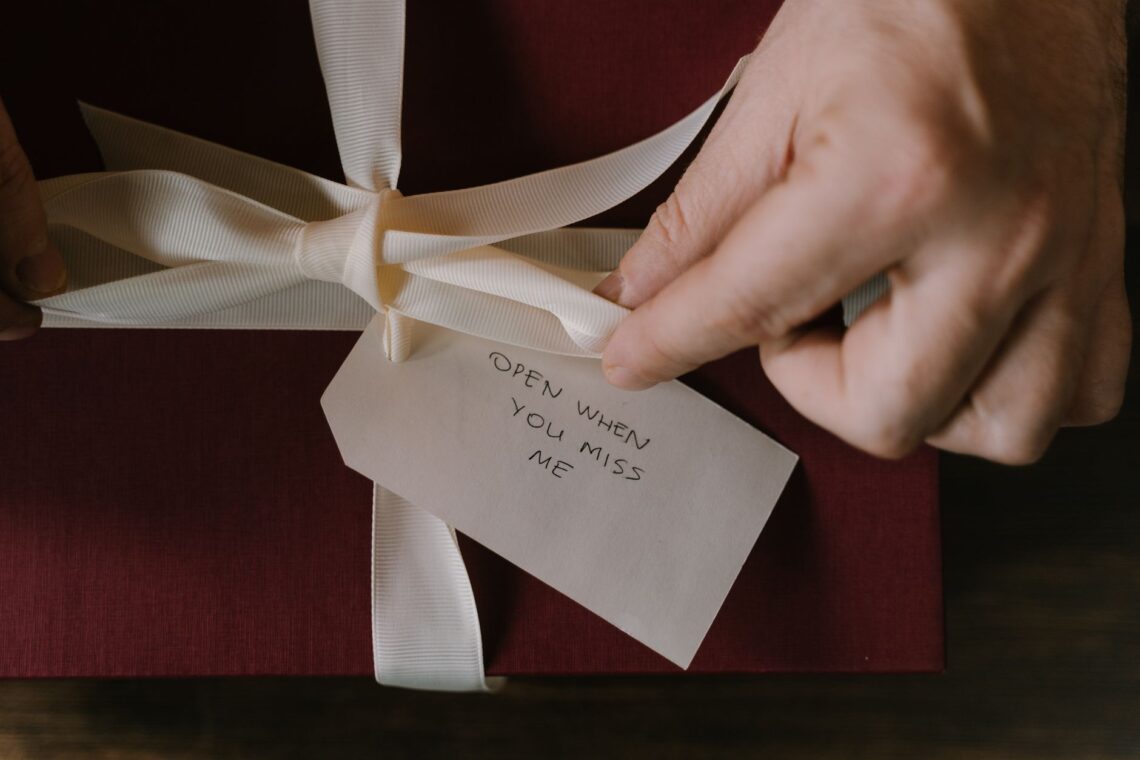
The gift itself matters, but presentation can strengthen the emotional effect. A short handwritten note often does more than people expect. It explains why the gift was chosen and gives the recipient a clear emotional anchor.
For example, instead of simply writing “Happy Birthday,” you might say, “I chose this because it reminded me of the trip we took together, and I wanted you to have something that keeps that memory close.” That kind of message gives the gift context, which makes the personalization feel intentional rather than decorative.
Timing can matter too. A personalized gift given at the right moment, such as after a big achievement, during a hard season, or on a meaningful anniversary, often lands more deeply because it feels emotionally aware.
When personalized gifts work best
Some occasions naturally invite more emotional connection than others. Personalized gifts often work especially well when the relationship is close and the occasion carries some emotional weight.
- Anniversaries – Good for shared memories and relationship milestones.
- Birthdays – Useful when you want the gift to feel distinctly about the person.
- Weddings – Often a good fit for keepsakes the couple can hold onto for years.
- Retirements – A thoughtful way to honor a person’s role and contributions.
- New baby or new home occasions – Great for items tied to a family’s next chapter.
- Mother’s Day, Father’s Day, and family holidays – Often ideal for gifts built around memory and appreciation.
In more formal settings, a personalized gift should usually stay tasteful and simple. In close relationships, it can be more playful, sentimental, or specific.
FAQs about personalized gifts that create emotional connection
Are personalized gifts always more meaningful than regular gifts?
Not always. A personalized gift can feel more meaningful when it reflects the person well, but a practical non-personalized gift can be just as appreciated if it solves a real need. The emotional effect comes from fit, not from customization alone.
What makes a personalized gift feel thoughtful instead of cheesy?
Restraint usually helps. Choose one clear detail that matters, keep the design clean, and make sure the item fits the recipient’s taste. When personalization feels specific and sincere, it is much less likely to come across as cheesy.
Are personalized gifts good for people who do not like sentimental items?
Yes, if the personalization is subtle and practical. A useful item with a small engraved detail or a private reference can feel thoughtful without being overly emotional. For less sentimental people, understated personalization often works better than obvious sentiment.
Can a personalized gift still be inexpensive?
Absolutely. The emotional effect usually comes from the relevance of the gift, not the cost. A simple printed photo, a handwritten note paired with a small custom item, or a modest object with a meaningful date can be far more touching than an expensive but generic present.
Choosing with care matters more than choosing big
The most effective personalized gifts are not trying to impress someone with size or expense. They are trying to say something true about the relationship. That is why they often stay in people’s minds for years, especially when they reflect shared history, real understanding, or a quiet detail that others would have missed.
If you focus on the person first and the personalization second, the gift is much more likely to feel genuine. That is usually what creates emotional connection, and it is often what makes a gift worth keeping.